

Adventure Of The Month
Under Wyoming Skies
A hunt on the high plains with the person who jump-started my love of hunting.
Story and photos by Diana Rupp
I thought I’d had enough hunting experience not to come down with buck fever, but I was a wreck as we waited for the mule deer buck to emerge from the brushy draw. My mind raced through endless scenarios. What if the shot was too long? What if we didn’t get a chance at this buck at all? What if we didn’t see another one? I stared expectantly through my binoculars and tried to force myself to relax. After all, this wasn’t even going to be my shot.
“How do you feel, Dad?” I whispered.
“Fine,” he replied, without a trace of the concern I was feeling. “Look, there are three does moving into the top of the draw.”
He was right. I watched them for a moment. They seemed to be following the buck’s exact path, which I hoped was a good sign. I waited expectantly for the buck to emerge at the bottom of the draw. If he did, Dad would have a shot opportunity just over 100 yards. It was a good setup, but having hunted whitetails in the Eastern timber for more than six decades, Dad knew better than I that deer of any kind rarely follow a script.
Thomas, the young cowboy who was our guide, certainly knew this as well, and he and Dad calmly studied the edges of the draw as we waited. I was apparently the only one who was a bundle of nerves, as I so desperately wanted Dad to get a shot at this deer. Barely able to sit still, I volunteered to hike to the top of the draw and walk through it in an attempt to move the deer out. Dad had the good sense to ignore my suggestion and Thomas politely counseled patience, so I welded myself to the ground and tried to concentrate on watching the draw, willing the buck to emerge.
The ranch was beautiful in the way of central Wyoming in October, with yellow grass carpeting the rolling pastures. In the higher sections, big boulders, red dirt, and clumps of sharp-smelling sage broke up that carpet. An early snowfall the week before had stripped most of the crispy golden leaves off the quakeys, but now it was sunny and clear, with cool mornings like this one giving way to bright, warm days.
The deer were moving—mule deer bucks seeking cover in the brushy draws and wooded cuts in the broken country as the air warmed. We had seen this one disappear into the top of the draw, and, hoping to ambush him coming out, we left the truck and stalked as close as we dared. We lay on our stomachs, got as comfortable as we could, and scanned the cover carefully with our binoculars.
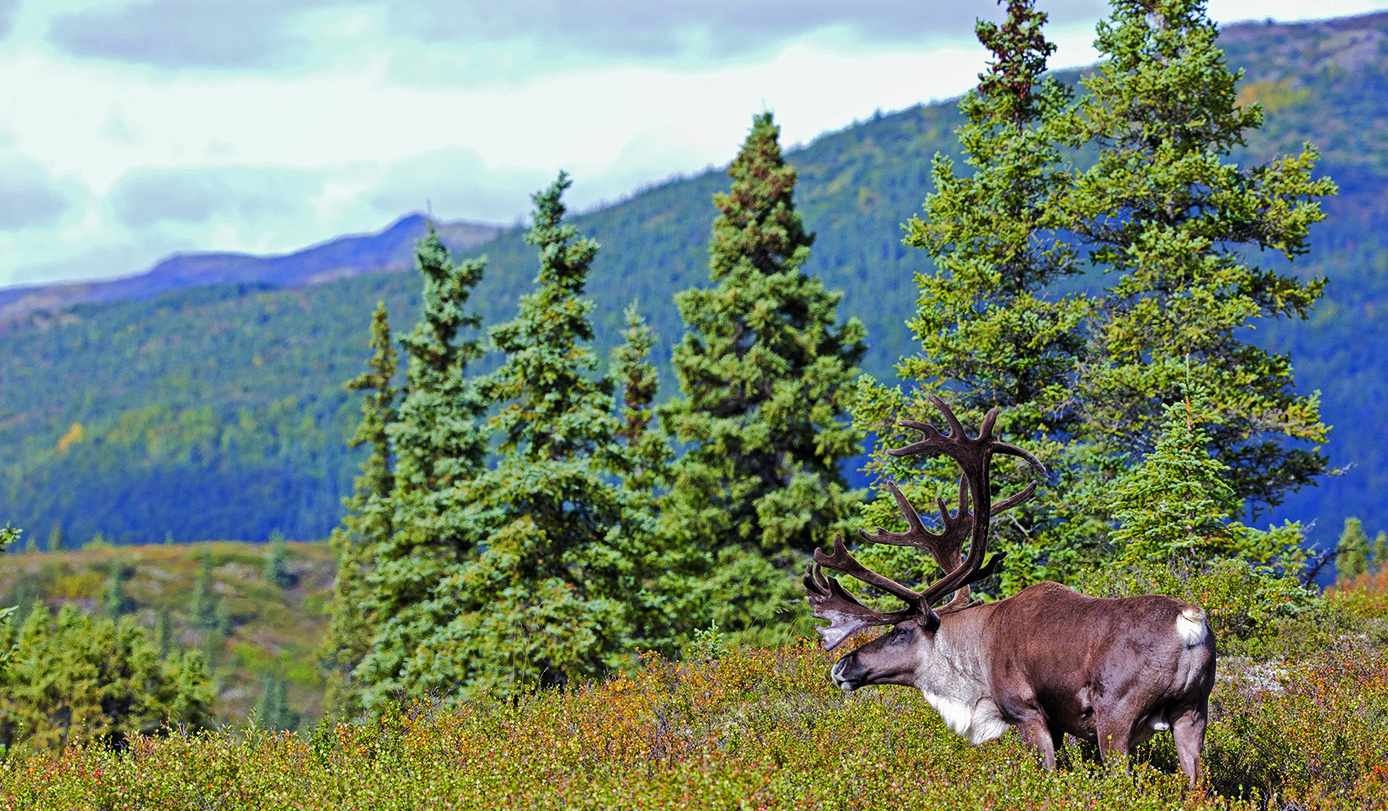
I’ve been fortunate to travel all over and hunt all sorts of big game, and since my parents were the ones who introduced me to the joys of hunting during my childhood years in northern Pennsylvania, I’d always wanted to bring them along on one of my more exotic hunts. Health problems unfortunately keep Mom close to home these days, but Dad, shrugging off his nagging arthritis and recent knee surgery, said he was ready to try a hunt. In 2008, he and I traveled to a remote lodge in far northern Manitoba in pursuit of caribou. The trip was an incomparable adventure into one of the remotest regions in the world. Dad enjoyed getting a look at the tundra and catching lake trout, but the caribou didn’t cooperate; we hardly saw any, and neither of us got so much as a shot. It was fun, but not exactly the success-laden venture I had envisioned for Dad’s long-awaited hunting trip.
So we tried again in 2009, this time for mule deer and antelope in Wyoming, and I was determined that this time, Dad would connect with game. He and Mom had hunted in the state years ago on several do-it-yourself junkets and had come to love the wide-open plains. So we applied for and drew mule deer and antelope tags, and I booked a hunt out of Glenrock with Coy’s Yellow Creek Outfitting. Dad was enjoying it thoroughly right from the start. I, on the other hand, felt as if I was hauling the dead weight of that unseen and untagged Manitoba caribou around on my shoulders.
I worried, too, about how well Dad, at age seventy-six, would get around in mule deer country with one artificial and one arthritic knee. When I was young he’d always out-hiked me effortlessly, but these days it was tough for him to cover steep or uneven ground. That’s one reason I was hoping so hard this buck would go by the script; I wasn’t sure how we’d go after him if he didn’t.
When at last the deer showed himself, my fears were realized. He had not come out the bottom of the draw as we’d hoped. Instead, he emerged from the middle of it and began angling up the steep, open slope on the opposite side. We got a good look at him as he stopped about three-quarters of the way up, standing broadside. He was a nice buck with classic mule-deer configuration--just what Dad was looking for. The rangefinder indicated that the deer was 360 yards away—a long shot for anyone, and certainly for a whitetail hunter like Dad more accustomed to 50-yard shots in big Eastern timber.
But I guess my concern about the difficulty Dad would have in hiking made me overlook something else I should never have forgotten: He’s an experienced hunter and an expert rifle shot. And with a finely tuned Rifles Inc. .25-06 on loan from my husband, Scott, he had the right tool for this job.
I was watching the buck through my binocular as he stood motionless, broadside, and then, when the rifle cracked, he simply sank from view, collapsing into the sage. Dad had literally dropped the buck in his tracks at 360 yards.
My dad is all smiles as we pose with the nice typical mule deer he took with one shot.
Thomas and I were ecstatic, but Dad wanted to see the buck before he’d believe it. Ten years prior, he’d have charged up the hill for a look, but instead we walked as quickly as we could back to the truck and let Thomas drive us around the gully and up to the top of the slope. There in the sage was Dad’s buck, shot perfectly through both lungs with the 110-grain bullet.
“Now I believe it!” Dad said. His broad grin said the rest.
With Dad’s deer safely installed at the meat processor in Glenrock, I too could finally start enjoying the bright fall days on the high plains. For the next two days we cruised the ranch roads looking at hundreds of pronghorn, trying and blowing numerous stalks on the spooky “speed goats” before we eventually both connected with representative bucks. Each evening, we called Mom to tell her about the day’s adventures. We longed to have her there to share them with us, but at least, I hoped, our stories and the photos we e-mailed home helped bring back memories of her own hunts in Wyoming.
Dad left Thomas and me speechless once again when he shot his pronghorn as it raced past us, full tilt, just 40 yards away. He calmly swung the .25-06 like a shotgun and tumbled the buck into the sage, then shrugged it off as being “just like a shot at a Pennsylvania whitetail.”
By the final morning of our five-day hunt, it was beginning to seem as though my own mule-deer tag would remain unfilled. Thomas picked us up extra early at the hotel that morning, and we were bumping slowly along the ranch roads long before first light, on our way to a spot Thomas thought would hold some deer. Driving along a creekbottom, we spotted the indistinct form of a buck with wide, typical antlers, feeding fifty yards from the road. At first we were amazed—we hadn’t seen any mule deer this low all week—and then, squinting through our binoculars in an effort to make out the size of his antlers, we started to get excited. As the deer moved off, Thomas and I left the truck and crouched on the side of the road, checking our watches impatiently as daylight approached at a seeming snail’s pace and the buck fed farther and farther away.
At last the sky began to lighten, and Thomas and I started to shuffle, bent over, across the pasture, but the buck spotted us and vanished into a line of trees. We charged up the side of a butte and got on top where we’d have a good view of the trees and hiked slowly across the top, searching the area below with our eyes. Suddenly we heard a whitetail snort, and to my amazement, our mule deer buck stepped out of the tree line right below us. My hurried shot went right over his back, though, and the buck stotted his way along the edge of the pasture and made his way up a steep, rocky hill into some broken country overlooking the bottomland. As we watched intently through our binoculars, we saw him join with several does.
Once we were satisfied we knew where the buck had ended up, we dropped down off the butte to where Dad had driven the truck around to pick us up. We explained where we figured the buck had gone and prepared for a new stalk as Dad settled in with his binocular to watch the proceedings.
It was about 8 a.m. when Thomas and I got to the base of the rocky hill, and as I felt the steady breeze in my face as we climbed, I realized the setup was a good one. The ground was soft and if you stepped between the sagebrush and prickly pear you could walk silently. I followed Thomas up until we were on top and we stopped behind a little pine tree. I froze when I realized the does had picked us up, but they were unalarmed, just glancing back curiously at us and resuming their feeding. As they faded behind a rise we continued on very cautiously.
Suddenly Thomas sank to his knees, and I quickly followed his lead; the deer were slightly off to our right. I could see they were less than 100 yards away but just beyond the crest of the rise. I plunked down on some sagebrush and set my 7mm Remington Magnum on the sticks. I could see the buck’s antlers—nothing else—sticking up behind some rocks, so I snuggled the buttstock of the rifle into my shoulder, got comfortable and steady behind the rifle, and watched the antlers intently over the top of my riflescope. Several does walked over the hillcrest and wandered between me and the buck, feeding and unconcerned. The wind was still perfect, and Thomas and I were totally motionless. The antlers swiveled back and forth and came closer, sometimes disappearing momentarily as the buck lowered his head to feed. Finally he stepped forward to where I could see a body attached to the antlers, but there were does in the way, surrounding him like a security detail. The does looked at us, but we didn’t move and they couldn’t smell us. I hardly dared breathe; one of them was no more than twenty yards away. The buck seemed oblivious, but I knew the slightest thing could set the does off—a movement of my head, a swirl of wind. But the breeze remained steady in my face.
At last, the buck took a step away from the does, then another, then one more and he was in the clear. I could see the top half of his chest some fifty yards away; rocks and sage obscured his front leg and lower chest, but I figured the shot was as good as I’d get. All I had to do was press my cheek to the stock, center the cross hairs, and squeeze the trigger. The buck dropped—I’d spined him. The surprised does trotted off when we jumped up. I ran to the buck and finished him quickly, and the tension of the hunt gave way to wonder and admiration of his fine rack as Thomas and I discussed, amazed, how long we’d been able to watch the animals at such close range.
I took my mule deer buck on the last day of the hunt after an exciting stalk.
Standing atop the rocky hill, I waved at Dad far below and gave him a thumbs-up, seeing him studying us intently through his binocular. Understanding, he climbed in the truck and drove it to the base of the hill, closer to where we’d be able to muscle the buck down through the rocks to the base of the hill so he could admire it with us.
“I watched the whole thing!” he enthused. “I thought those does would spook at any minute!”
The next day we’d board separate planes for opposite ends of the country as Dad trekked back to our Pennsylvania homestead to retell his stories to Mom, and I returned to California where Scott would be thrilled to hear about Dad’s success with his favorite rifle. Although our father/daughter hunt had been altogether too short, it would remain indelibly framed in memory, flanked by two great bucks, one taken with a single perfect and impressive shot and one on an intense close-range stalk. An unforgettable experience bathed in the smell of sagebrush and the golden light of the Wyoming plains.
For information about this hunt, contact Coy’s Yellow Creek Outfitting: www.coysyellowcreek.net.
To read the entire article as it appeared in the July 2010 issue of Sports Afield, click here.


Adventure of the Month
Great article! This writer is awesome.