

Notes From Afield

July 2010 | Sponsored by Aimpoint

Going to Extremes Get the Edge with Aimpoint Four Great Hunters

Going to Extremes

Get the Edge with Aimpoint

Four Great Hunters

Going to Extremes

Tips for hunting in the toughest weather.
 

By Craig Boddington

Weather is one aspect of hunting that you can’t do much about. Sometimes you can knowingly avoid the hottest or coldest months—but in so doing you may be giving up the best hunting period for that time and place. The whitetail hunting in Alberta and Saskatchewan is a good example. October is a lot more pleasant, but November is the rut, so although it might be miserable that’s the best time to catch the bigger bucks moving. Hunting Marco Polo sheep in Tajikistan is the same deal. The rut is in late November and on into December, when the big rams are on the move and some of the big boys drift in from China.

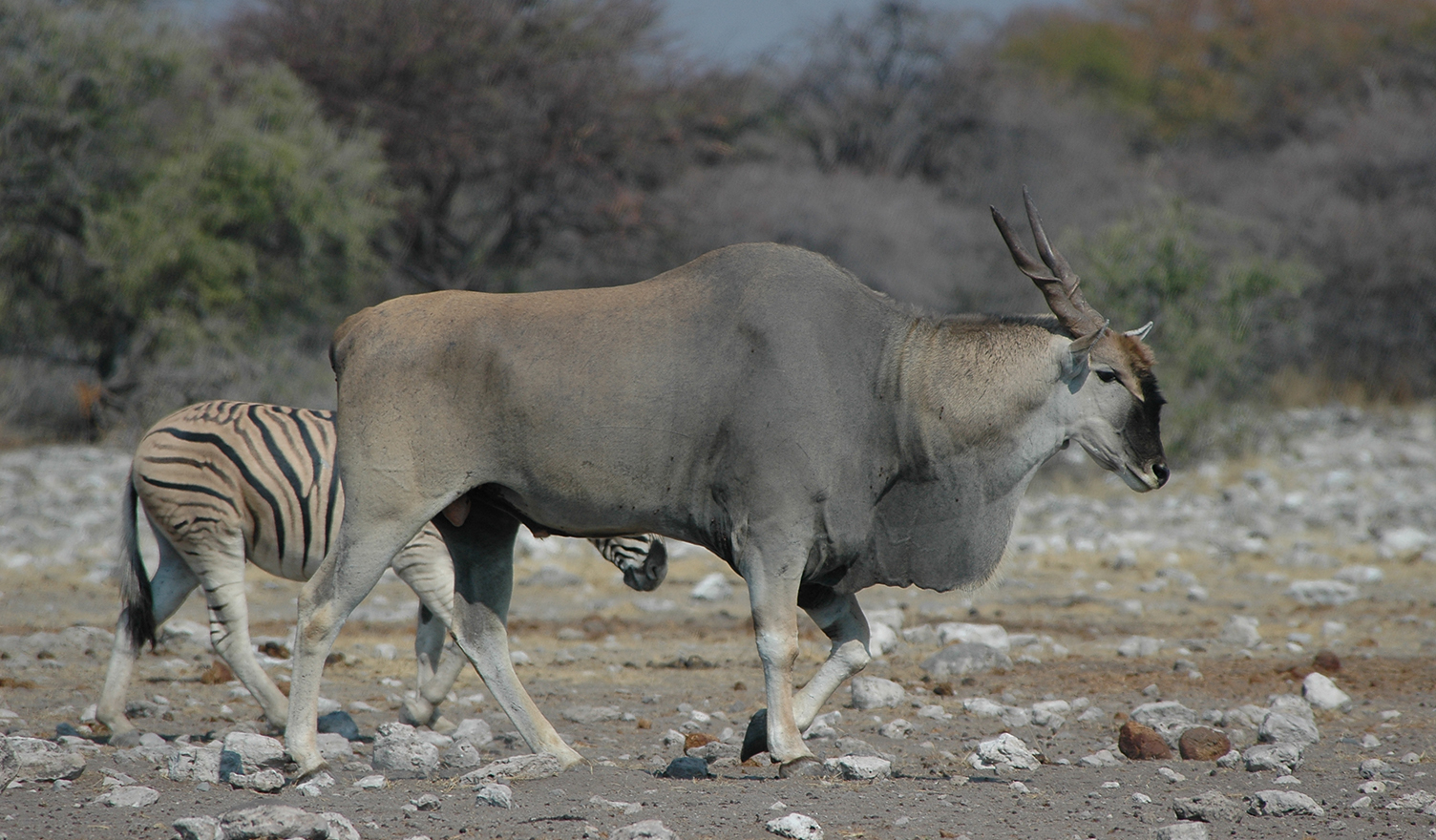
A tracking hunt for Lord Derby giant eland is one of the hottest hunts in the world, Equatorial conditions with very little shade. It was late afternoon and I’d rolled my sleeves up, but I had them down most of the day, and I was grateful for a hat with a full brim.

Although most of us associate hunting with crisp, cool weather, there is quite a bit of hot climate hunting here and there. When you’re hunting Derby eland in Central Africa in January, February, and March, the weather is blistering-hot and dry. When you’re hunting bongo in the same region in May and June it’s blistering-hot and wet. Hot weather hunting doesn’t have to be all that exotic. Spring turkey hunting is often extremely warm, especially if you’re after Osceola or Rio Grande birds. A lot of pronghorn hunting is done on hot September days, and my local rifle deer season on the California Central Coast opens on the second Saturday in August. It cools off a bit at night, but you can expect the coastal mountains to be ovenlike by midmorning, with temps not falling below a hundred until well after dark.

But if you want to hunt, you have to get out there, so you’d better learn to deal with the extremes. Here are some tips for dealing with extreme hunting temperatures.

When It’s Hot

First and foremost, cover up. In the mild winter climate of southern Africa it’s almost my trademark to hunt in shorts. When it gets really hot the game changes, and I go to long trousers and long sleeves. The baseball hat goes away, and I wear a hat with a full brim. This is partly because I sunburn easily, but there’s more to it than that. Really hot weather generally means more insects, and the tropical diseases they carry. The more skin you expose the greater the risk of both bites and bad bites. Good old cotton is far and away the best in really hot weather.

After overexposure to sun, the greatest risk in hot weather is dehydration. Believe it or not, covering up actually reduces moisture loss—but you still have to concentrate on staying hydrated. Pound down a couple of liters of water first thing in the morning, before you leave camp, and keep drinking through the day. Once you start to feel thirsty it’s too late; you are behind the power curve and you have to keep drinking just to catch up. Don’t pass any opportunity to drink, and make sure you don’t stray from the hunting vehicle without plenty of fluids.

Plain old water is the best; anything with alcohol in it is the worst. For me soft drinks are sort of neutral, certainly better than nothing. Powdered sport drink mixes made for the purpose are very good, but the main thing is to keep drinking, and watch for danger signs: dark or no urine, cessation of sweating. When you have to be out in the sun, go for it…but in the heat of the day stay in shade as much as you can. These days salt tablets are out of fashion, but when you’re perspiring heavily you do need salt. I don’t take salt tablets, but I use plenty of salt at mealtimes.

There isn’t much you can do to make really hot weather more pleasant, but you do get used to it. Some years ago we did a communications exercise near the Kuwait-Iraq border on a miserably hot day, well into the 140s. Toward sundown we gathered to go over lessons learned and it seemed really pleasant . . . until some idiot told us it was still 125 degrees! During the day you have to be careful; you’re busy and heat exhaustion can creep up on you. A bigger challenge, at least for me, is getting good sleep in sweltering heat. Take a couple of small battery-powered fans in your kit and plenty of batteries. That is probably the single best hot-weather tip I can offer.

When It’s Cold

I’m a real wimp when it comes to serious cold. Of course, “serious cold” means different things to different people. There’s dry cold and wet cold. Add in some humidity and wind chill, and temperatures in the 40s can be miserable. Whatever your definition, the only solution for serious cold is to dress for it in good gear.

There’s also a big difference between dressing for a deer stand in Alberta and dressing for a winter sheep hunt. I have trouble putting on enough clothes if I intend to be stationary for long periods in cold weather. For this kind of hunting, and for genuine Arctic hunts, I’ve always relied on the expedition-quality stuff from Northern Outfitters, but there are other solutions, including warming bags designed specifically for insane activities like stand-hunting for whitetails and ice fishing in sub-zero weather.

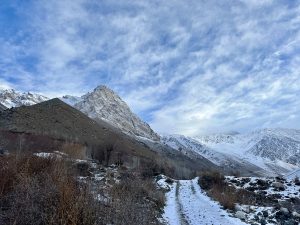
I took this Himalayan ibex in northern Pakistan in February, in the shadow of K-2, second highest peak in the world. In cold country one of my most essential pieces of gear is a silk bandanna—it’s amazing how much heat loss it prevents.

In the main, however, I rely on a sensible layered approach that starts with perspiration-wicking long underwear. In temperatures that are near or below freezing I still go old-fashioned with wool or a wool blend. The warmth remains even if you get damp (and you surely will if you’re moving in snow or freezing rain). If it’s a little bit warmer, like the high 30s and 40s, then I wear lighter clothes, carrying raingear as an extra layer against both wind and precipitation.

For me the biggest problem in weather that’s cold or wet or both, are the extremities: Head, hands, feet. The greatest heat loss of all is from the neck and head, so when it’s cool at all I start with a silk bandanna around my neck. It is truly amazing what a difference this makes, and it’s equally amazing how few of us use this simple little trick. I’ll wear a baseball cap until it’s pretty darned cold out—but at some point the ears must be covered. A hat with flaps is great, and so are wool watch caps. I carry a light face mask that that I can wear under a cap—and I make sure my outer layer has a good hood. Whether it’s a rain jacket or a parka, an outer garment without a good hood is just plain useless!

Hands and feet are a bigger problem for me, since both have been frostbitten. You want to avoid this if at all possible. It’s a good way to lose fingers and toes, and even if you don’t, the effects are cumulative: When the mercury drops, my hands and feet start screaming. I like a light pair of wool gloves as a base layer. Every time I’m in New Zealand I pick up two or three pairs, and you’ll see me wearing them even when it’s in the fifties. I can shoot with these light gloves, but when it gets much colder I have to add a windproof layer. For really serious sub-zero stuff, it’s multiple gloves inside of mittens.

The biggest problem with gloves is they are the first things to get wet. Neoprene is one solution; another is to make sure you have a couple extra pairs of gloves in your daypack. Chemical hand-warmers are also amazing tools. Some hunters use them all the time, carrying enough for a couple of changes a day. I tend to keep them in reserve—but I always have a few in my pack. My primary use for them is my hands, but they are also made for feet and in larger sizes to put over your kidney area. The various brands include Hot Hands, HeatMax, and Grabbers. Just tear open the pack, shake the inside contents, and feel the warmth.

Keeping one’s feet warm and dry is perhaps the most complicated challenge. If you’re moving you need one level of protection, but if you’re stationary you need much more—and it’s almost impossible to walk or climb in footwear intended for the coldest conditions. I have “moon boots” for late season whitetail hunting and serious Arctic hunts. They are the only boots that have kept my feet warm in serious subzero weather—but I can’t walk in them. The next step up is pac boots. Even with my sensitive feet I can walk in them comfortably when it’s well below zero, and I can remain stationary comfortably into the low teens. Pretty good for me!

In Any Extreme

Dehydration is just as big a problem in cold weather as in hot—and it can really creep up on you. I’m an inveterate coffee drinker and there’s nothing better when it’s cold—but caffeine is almost as bad as alcohol for drying you out, so don’t restrict your fluid intake to caffeinated drinks. Sunburn and wind burn are just as bad when it’s cold as when it’s hot. Sunburn may be worse because of reflection off snow, and you may not feel it until it’s too late. With my fair complexion and our lack of knowledge about such things when I was a kid, me worrying about skin cancer is probably like shutting the barn door after all the horses are gone. But I put on a good sunblock every day, rain or shine. I remember when we thought a SPF 30 was pretty darned good. Last year I used SPF 85, and this year I’m using SPF 100. If you have better skin than me you may not need as strong, but whether it’s hot or cold you should put on good sunblock and lip balm. And try to avoid whining about the weather. No matter how bad it is, it can always get worse!


NOTES FROM AFIELD: Going to Extremes | Get the Edge with Aimpoint | Four Great Hunters