

|
||||||
|
A Lot of Leopards
Africa’s leopard hunting is getting better all the time.
By Craig Boddington
Recently I got an email from Marina Lamprecht. She and her husband, my old friend Joof Lamprecht, are Hunters Namibia, one of Namibia’s better-known outfitters. She attached a notice that Namibia was holding a “moratorium” on leopard permits for the remainder of 2009, the stated reason because the CITES quota for export permits has been exhausted.
At first blush this sounds ominous. If true, it’s bad news for anyone who has a leopard hunt planned in Namibia for the rest of this year, because the necessary license will not be issued. On another level, it reflects poor planning, because for the last couple of seasons there has been a backlog of legally hunted leopards. In essence, at the start of every year the Namibian authorities have dipped into the coming year’s quota in order to export “leftover” leopards taken the year before. So, while I could be wrong, I infer that the moratorium has been enacted so they can catch up.
Valuing Leopards
In Namibia most hunting is on private land, with the landowners able to set their own harvest goals. In the future this moratorium may bring changes, at least where leopards are concerned. Outfitter quotas are a possible solution, and it seems obvious that, in the future, it will be more difficult to change a hunt in midstream and decide to hunt leopard. Chances are leopard licenses in Namibia will need to be spoken for well in advance.
This actually heralds very good news for Africa’s leopards. Namibia is just a microcosm, but when I first hunted there thirty years ago leopards were scarce. Although leopards were “open,” the hunting was so unsuccessful that it was rarely attempted. Leopards had little value and the ranchers wouldn’t tolerate them, with remnant populations hanging on only in remote areas.
In the 1980s the fledgling hunting industry took wings, and leopards began to have value. The CITES body allowed a small quota of exportable leopards, a quota that was initially hard to fill, but Namibia’s leopards rebounded quickly. Just five years ago the quota was doubled, from 125 to 250, the number chosen because Namibia could demonstrate this harvest as a combination of depredation and trophy hunting. In those last five years the export quota has been filled more and more quickly, with a backlog eating into the next year’s quota. Perhaps it’s time for another quota increase, perhaps not, but the clear evidence is that Namibia’s leopards are increasing rapidly.
They're Not Endangered!
A lot of hunters feel funny about hunting predators, not just leopards. Few people eat the meat (I have; it’s good!), so a leopard hunt is primarily a trophy hunt, which is also a concept that many hunters feel funny about. There was a long thread on this subject recently on an online African forum. The people in this chat room are avid and experienced African hunters, and I was surprised at the number of folks who stated they had no desire to hunt a leopard. That’s perfectly fine; we all hunt for our own reasons, and we all have some game animals we have no desire to pursue. But I was very surprised when a couple of guys opined that the African leopard was “threatened” or even “endangered,” and thus should not be hunted.
This is 1970s-speak, and obviously a good job was done back then making the public aware of the plight of the leopard. In those days leopard coats were high fashion. Trapping was widespread, and leopards were becoming scarce in many areas. But when is the last time anyone saw a real leopard coat? America’s Spotted Cat Act, followed by the CITES treaty, pretty much ended the fur trade, and the leopards have recovered nicely. Too, it seems generally agreed (even by many anti-hunting groups, albeit grudgingly) that regulated sport hunting is good for leopards because of the value it places on them.
This is proven by the fact that the international body, CITES, has not only maintained export quotas in numerous African countries, but over the years has increased quotas in several countries, and has authorized quotas for “new” countries, the latest being Uganda. Note that U.S. Fish and Wildlife has not consistently followed CITES; we allow importation from “sub-Saharan” countries only, which precludes Americans from importing leopard trophies from C.A.R. and Ethiopia, and we have not yet accepted Uganda’s quota. But, subject to proper permits, Americans are allowed to import legally sport-hunted leopard trophies from Botswana, Mozambique, Namibia, South Africa, Tanzania, Zambia, and Zimbabwe.
Whether you or I have any desire to hunt leopard is purely a personal decision, but over the years it has become an irrefutable fact that regulated sport hunting (trophy hunting, if you will) has been good for Africa’s leopards. It is almost impossible to count leopards in the wild, certainly across the vastness of Africa, but one educated estimate puts the current population of wild leopards in excess of two million. This is not endangered, nor threatened. But, realistically, the leopard is still threatened in many areas, primarily where he has no value, and thus his almost insatiable depredation on livestock is purely an expensive and somewhat dangerous nuisance. It is an inescapable fact that where he is thriving best is in the countries where he is hunted, and thus has the most value.
Changes Through the Years
When I first hunted in Africa, Americans were not allowed to import leopard trophies at all. In those days I hunted leopards casually, and it’s probably a good thing I was unsuccessful, because I have no idea what I would have done with the non-importable skin. When import permits were authorized, I got serious—and I still couldn’t get a leopard. Conventional wisdom has it that the “best” countries for leopard are Zambia and Tanzania, where most hunting is in big, wild government concessions, game moves naturally, and it’s relatively easy to get a leopard on bait. In theory, yes, but luck is always a factor. I have tried multiple times over the years, but I have never taken a leopard in either country. I have also tried in Mozambique, which is very good. And failed. And I have tried in South Africa, a country whose hunter-educated and cattle-fed leopards are huge, but very difficult. I’ve failed there, too.
My first leopard was taken in Botswana. Botswana produces huge leopards that are often easy to bait, perhaps because the quota is very low. That first leopard, however, was not taken on bait, because at that time baiting was not legal in Botswana. It was also not a huge leopard. In fact, and I’m not proud of this, it was a normal-sized mature female. This reflects a big change in leopard hunting. For many years we hunters considered that “a leopard is a leopard.” One would not take a female with cubs, of course, but most PHs and their clients considered that any full-grown leopard was acceptable.
Not anymore. There has been a sea change in both acceptable and legal trophy quality, which has also been very good for the leopards. Today Tanzania and Namibia have minimum standards for a leopard to be exportable. Zimbabwe’s license, at least on Parks and Wildlife estate, specifically states “male leopard.” If a mistake is made, the PH (not the client) faces a stiff fine. Throughout Africa, whether specifically illegal or not, almost all PHs are now looking exclusively for full-grown male leopards, and doing their utmost to discourage the taking of smaller males and even very large females.
Best Bets for Leopard Hunts
Despite this limitation, I have seen leopard hunting getting better and better, and more successful. Namibia is obvious. In 2007 my wife, Donna, and I both took nice toms on bait in daylight, a feat almost unheard of in Namibia just a decade ago. Despite my own lack of success, Zambia and Tanzania remain fantastic. Botswana is almost a sure thing, although the quota is fast dwindling to nothing. Mozambique and South Africa are getting better every year. Zimbabwe remains steady and stable, still one of the best as a combination of affordability and availability (at 500, she ties with Tanzania, a much larger country, for the highest CITES quota).
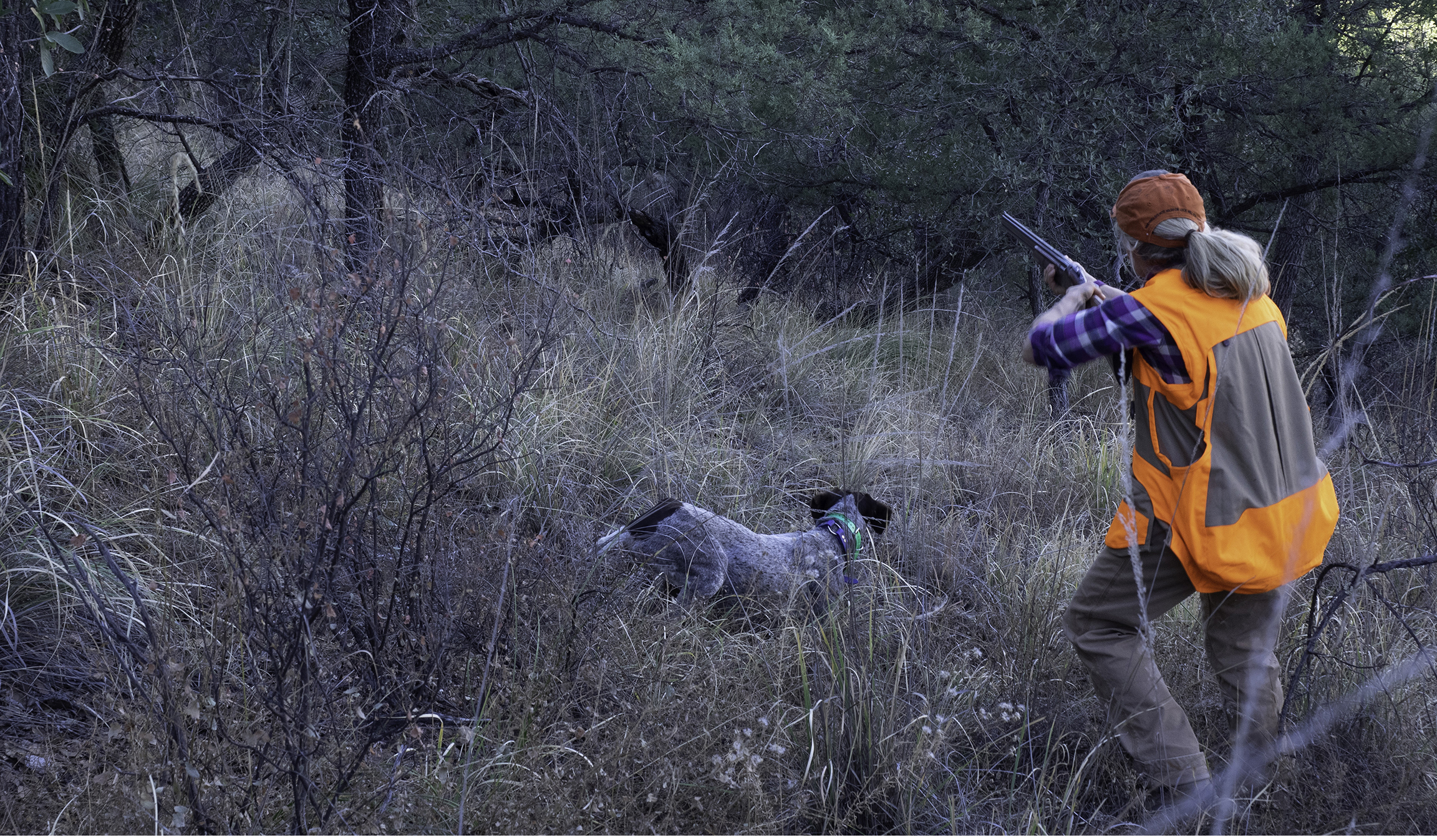
In the southern ranch country Zimbabwe produces huge cattle-fed leopards that have been educated for years. Leopards are endemic in the typically thick brush, but they tend to be nocturnal. Night hunting is legal, acceptable, and almost essential. This, like private land in Namibia, is a place where hunting with hounds is an option to baiting. Hound hunting is fast and furious, unpredictable and dangerous. It is not for everyone. But despite my own daughter’s recent accident on a hound hunt in Namibia, I support the technique not just for its excitement and success (which is not assured), but because it is highly selective, and a sound alternative to night hunting.
In the more remote areas of Zimbabwe, the Zambezi Valley a prime example, the biggest leopards are not as big as in ranch country, but daylight baiting is successful (and in designated Parks and Wildlife Safari Areas, mandated by law). My experience suggests that success isn’t assured anywhere, but my experience also suggests that Zimbabwe holds her own. Dry years, when prey species are concentrated early in the year, are tough. This year, 2009, was a wet year, with the bush thick and green—and it seemed like the year it rained leopard, with success incredibly high.
We can’t predict the weather when we plan a safari; we can only search out a professional hunter who is an experienced leopard hunter, and who has a good area to hunt. Today that combination exists across a wide swath of Africa, with more good options than I have ever seen in my career. Which, more than anything else, tells me that Africa’s leopards are doing just fine—especially in hunting countries. It’s perfectly OK to have no interest in hunting leopard, and many among us feel that way. It is not OK to ignore the facts and suggest that leopards shouldn’t be hunted.